
Nomenclature
GTO – Geostationary Transfer Orbit
GEO – Geostationary Orbit
LEO – Low Earth Orbit
LITVC – Liquid Injection Thrust Vector Control
GEA – Gesellschaft für Entstaubungsanlagen
As a hobby Andrew Beal read about aerospace in 1995 and founded Beal Aerospace in 1997 to develop a small launch vehicle called BA-1 (1). Originally the vehicle was to use solid propellant for its simplicity, and this (2) likely influenced the company to buy a production site in McGregor Texas USA, where the National Gypsum Company of Buffalo, New York built bombs for the US Army in WW2 from 1942 to 1945 (3, 4). The Phillips Petroleum Company which was rocketry’s division was bought by Rocketdyne made take off assist rockets, gas generator start cartridges, and solid propellant motors from 1952 to 1977. It was then operated by Hercules Incorporated which was purchased by Raytheon where it made missiles, rocket motors, and ramjets from 1977 to 1994, and from 1994 to 1996 Alliant Techsystems operated it.


(5, 19)
The design then switched to aviation kerosene and liquid oxygen in a pressure fed cycle where helium filled the propellant tanks to high pressure and forced it into the engine.
(5, 6) The propellants of BA-1 switched to use propane and oxygen, and then again to aviation kerosene and 90% hydrogen peroxide (7). It would be 5 meters in diameter, 50 meters high, have a liftoff thrust of 635 tons and be made up of 3 stages. The 1st stage having a mass of 324.8 tons full and 27.1 tons empty, 2nd stage 99 tons full and 7.6 tons empty, 3rd stage 23.5 tons full and 2.1 tons empty (8).
This BA-1 was to get 7710 kg to LEO and 2645 kg to GTO at a 19.5 degree inclination, to cost “a substantially lower lower price” than Delta II, to launch telecommunication satellites (5, 8, 9). BA-1 was made largely for LEO and small GEO satellites. It was canceled in June 1998 with the company focusing on a larger vehicle of similar design, BA-2 (10).
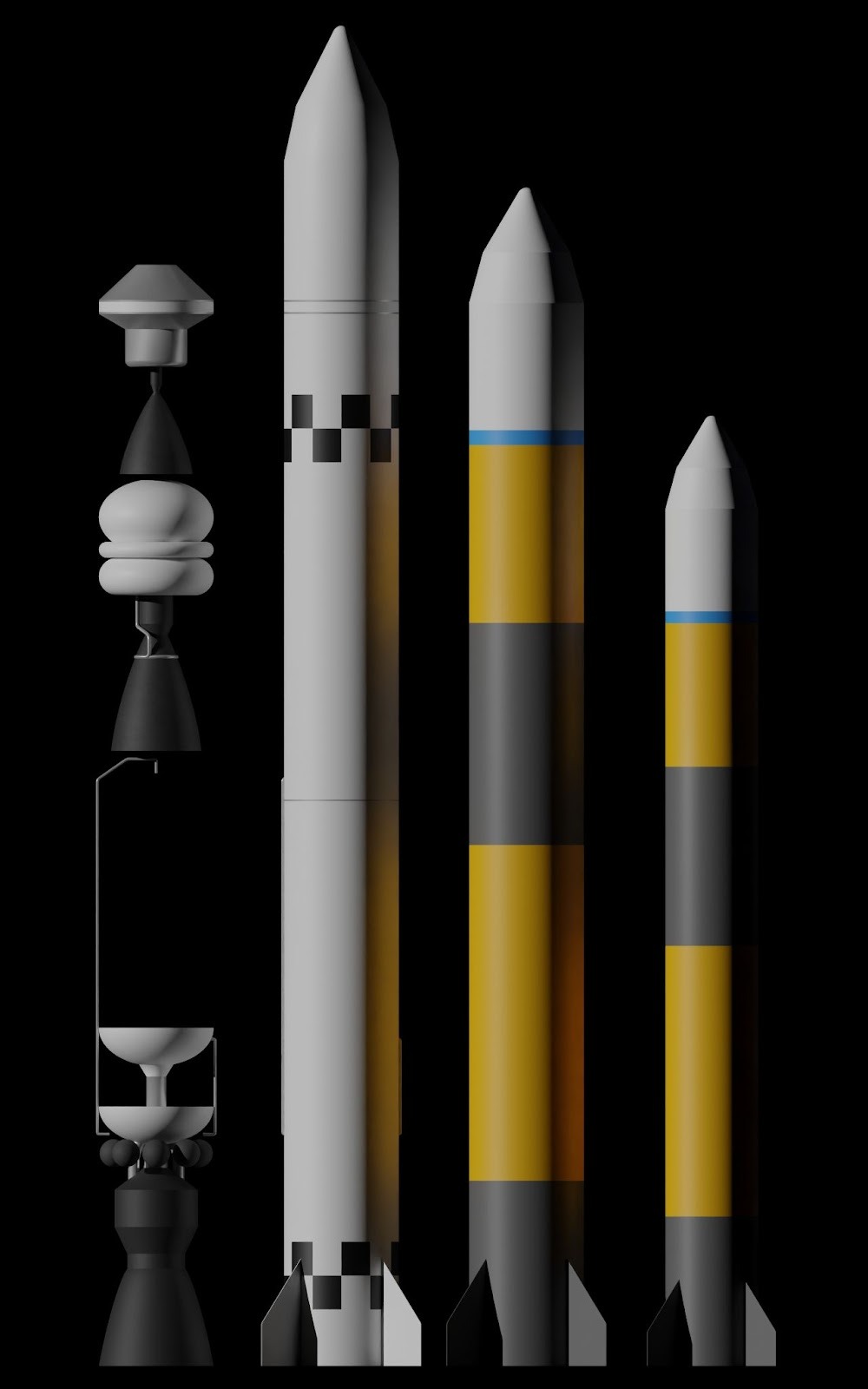
The BA-2 would be 6.2 meters in diameter and either 61, 64.6, or 72 meters high (8, 11, 12). It would have a 1st stage 762.0 tons full, 54.4 tons empty, its BA-3200 producing 10165 kNs at sea level and 13347 kNs in vacuum, a 2nd stage 126.7 tons full, 9.4 tons empty, its BA-810 producing 1335 kNs at sea level and 3603 kNs in vacuum, a 3rd stage 16.7 tons full and 1.8 tons empty, its BA-44 producing 178 kNs in vacuum, with up to 16964 kg of payload to LEO and 5987 kg of payload to GTO.
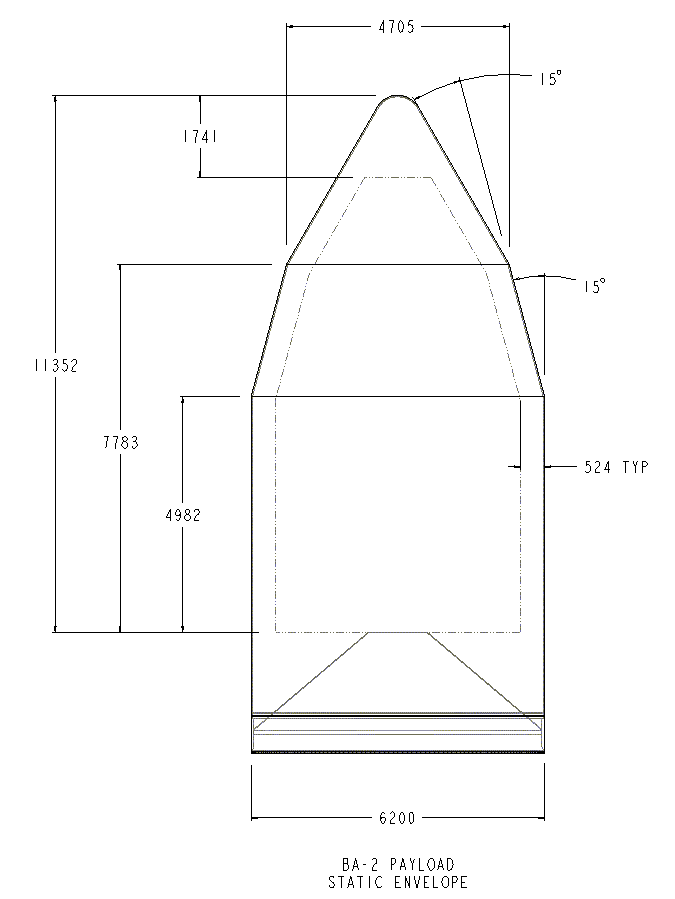
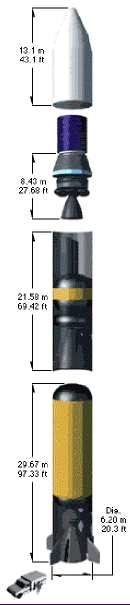
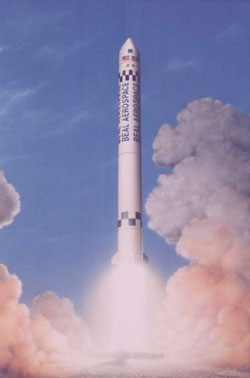
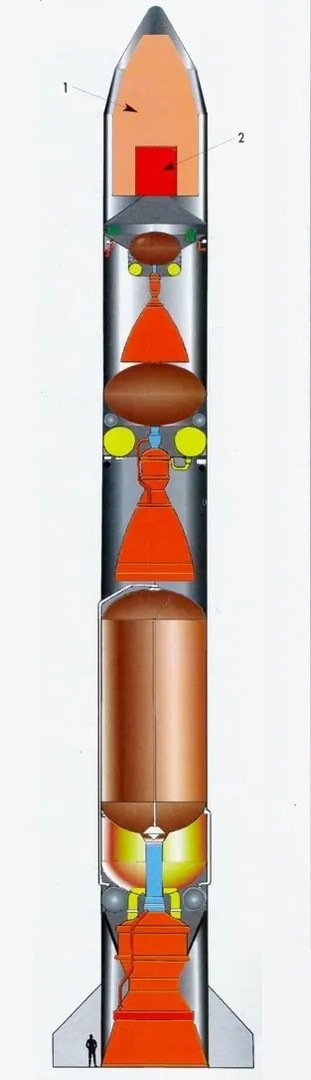
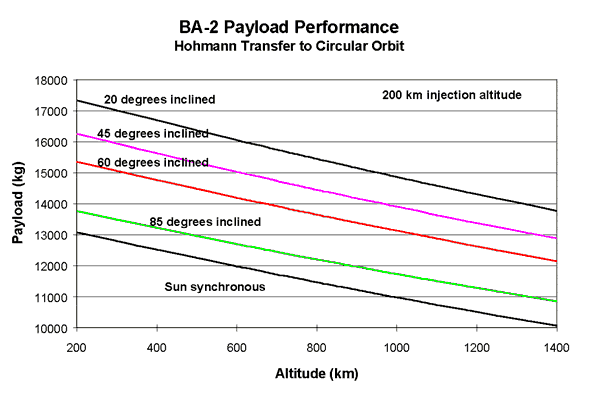
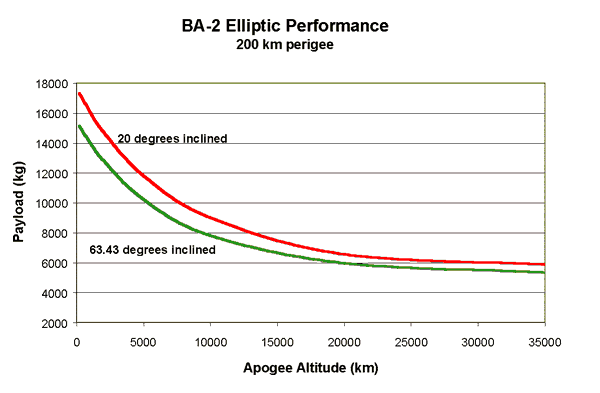
(5, 10)
The BA-2 would use LITVC using hydrogen peroxide injected into the fuel rich exhaust to create asymmetric thrust on the 1st and 2nd stage, while using electromechanical gimballing on the restartable 3rd stage engine. The LITVC ports allowed the possibility of increasing the thrust at take off by opening all of them though this was deemed not worth it. All stages would be primarily made out of composite materials, with the ablative material inside the engines being silica-phenolic laminents that had low enough erosion to make it viable to reuse chamber and nozzles (7). In the engines hydrogen peroxide flowed through catalyst beds, decomposed, and hot oxygen/steam mixture had kerosene from surrounding orifices injected into it, and the spaces between kerosene injectors acting like flame holders.
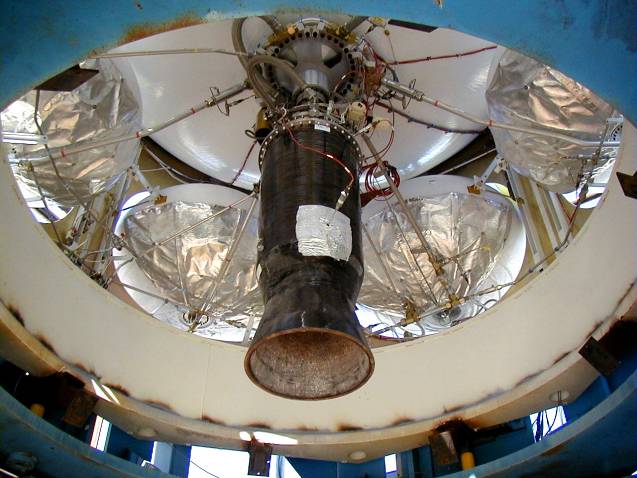
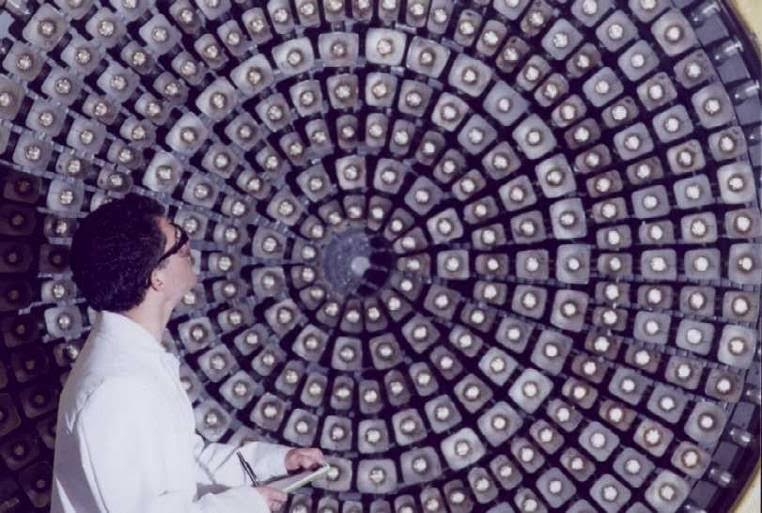
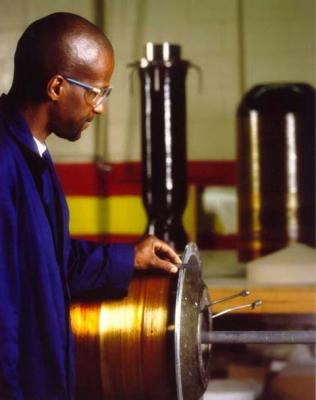
(5, 7)
Payloads avoided experiencing high acceleration by the engines throttling down to 50% throttle by limiting the amount of helium entering the propellant tank later in flight. To decrease the amount of helium needed, it entered the propellant tank through the bottom, warming itself with the propellant due to the helium cooling from decreasing pressure in the pressure vessel it was stored in.
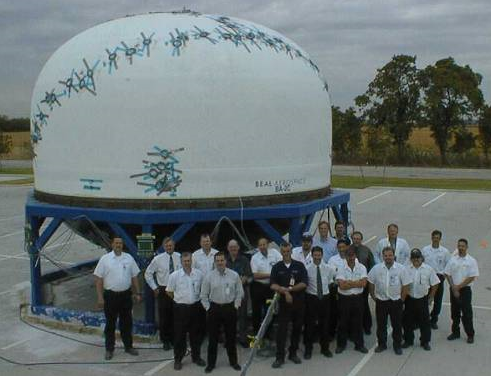
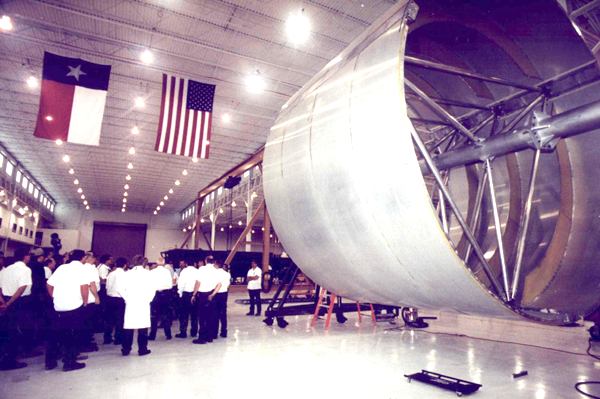
(7)
Beal Aerospace had trouble finding a launch site, which was further exacerbated by their large size making transporting the rockets hard from their production site in Frisco, Texas. Launching from Sombrero, Anguilla of the British Overseas Territories was planned as Andrew Beal signed a 98 year agreement in December 1997 for its exclusive use, requiring a leasing annual fee of $6 million in USD 2000 (13, 9). As of 1998 4 launches in 2000 and 12 launches per year by 2002 of BA-2 was planned, with the vehicles to be manufactured in the Virgin Islands, probably at Saint Croix, through “Caribbean Space Technologies LLC” a Virgin Island company owned 99% by Andrew Beal, not Beal Aerospace, due to the fact it would be largely impractical to move the stages out of Texas (14, 7, 15).
(10)
Due to the fact that only a light house was there the infrastructure to integrate payloads, launch BA-2, and support workers would risk birds, fish, and lizards unique to the area, and eventually analysis of weather at the island made Beal Aerospace abandoned the site in 2000 instead focusing more on the Essequibo region of Guyana, a territory disputed by Venezuela and the purchase of 26000 acres and leasing 75000 acres by Beal which would require relocation of indigenous populations brought protest (16, 17).
After the BA-30 was successfully tested with a sea level nozzle design at a date the author can’t find the a BA-810 with sea level nozzle design was first test fired at horizontal thrust stand at Building 1140B on the 9th of February 2000 and for 21 seconds successfully on the 4th of March 2000 (7, 4). Early tests had issues with the stability of hydrogen decomposition which created vibration that broke the fuel feed pipes. A construction of a 240 ft vertical test stand for test firing the BA-3200 but never used by Beal Aerospace.
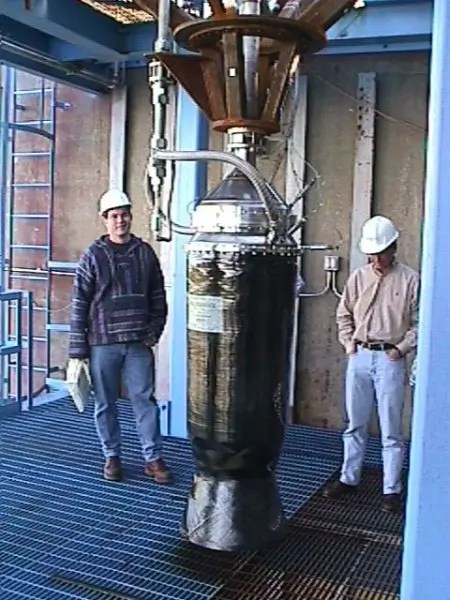
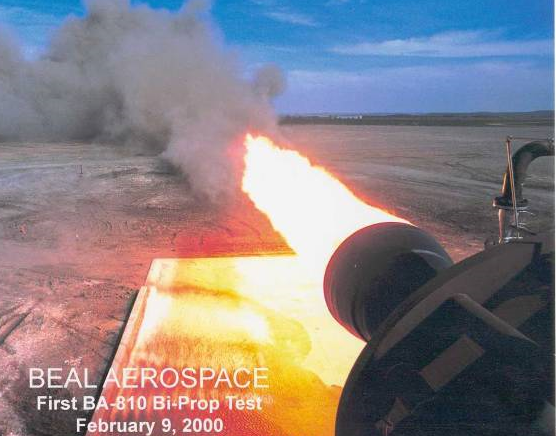
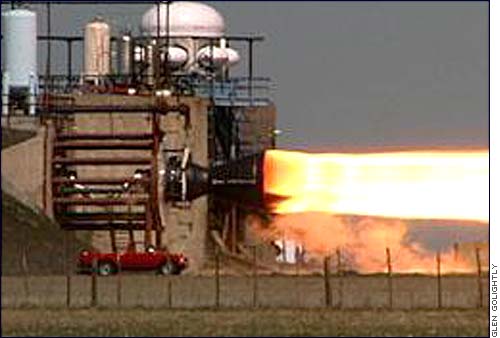
(7)
In May 20, 1999 in a hearing before the subcommittee on science, technology, and space of the committee on commerce, science, and transportation of the US Senate of the 106th Congress Andrew Beal stated that the greatest risk of Beal Aerospace was not the competitive marketplace but government intervention and proposed the government not taxing launch profits and for the government to only pay for successful launches, and begged the committee to not fund billion dollar experimental programs (18). Due to Andrew Beal not believing the company would be able to compete with companies that would win contracts for the Space Launch Initiative, Beal Aerospace ceased operations in October 23, 2000 and sold off its assets (19).
SpaceX acquired the McGregor test site in 2003 (20, 4). The Frisco factory then used by GEA, presumably for food/drink/medicine production/packaging, and as of 2023 is the Frisco Public Library (21, 22). Today two BA-810 nozzles and a scale model of the BA-2 are at the Frontiers of Flight museum in Dallas Texas (23).
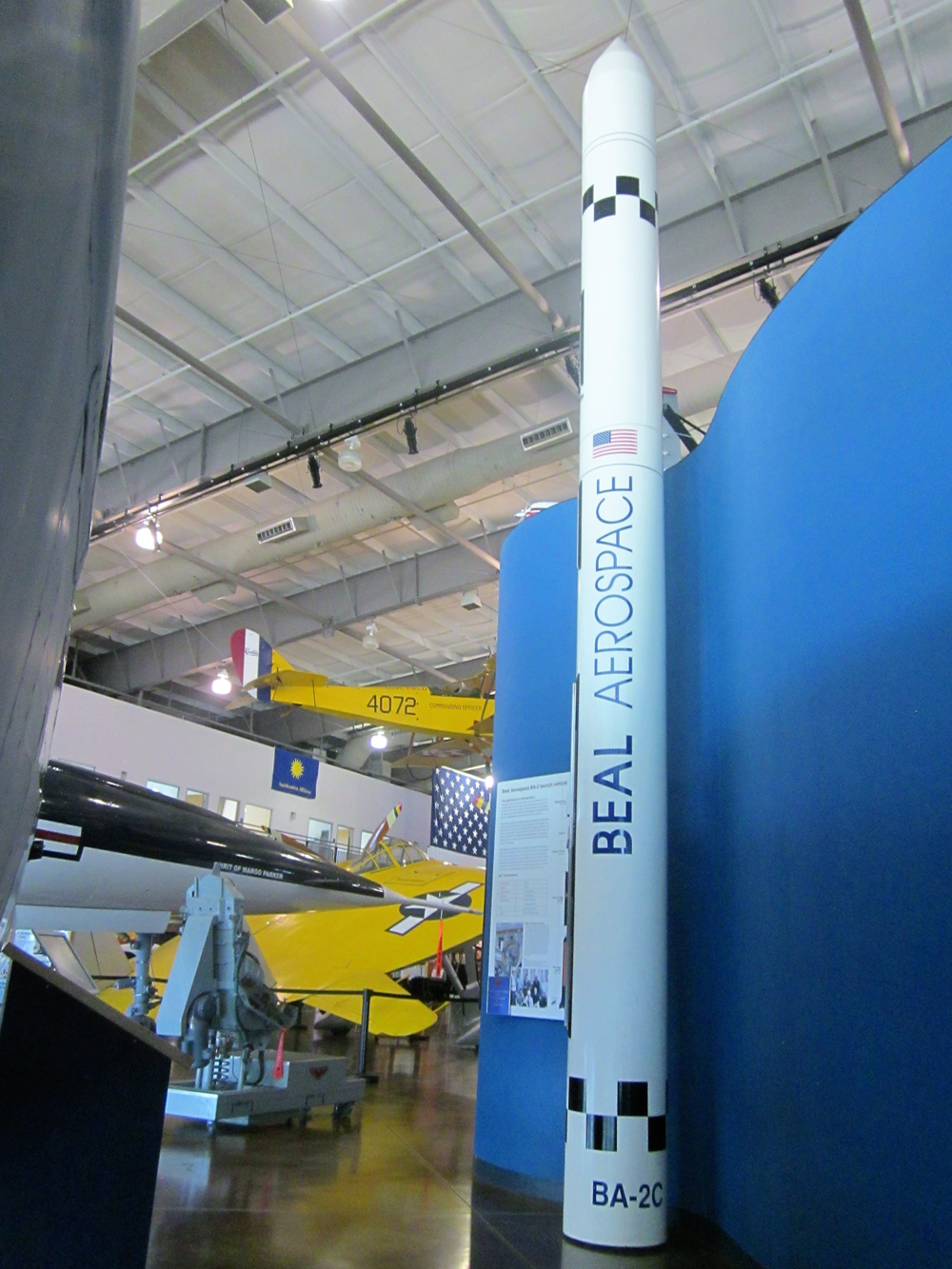
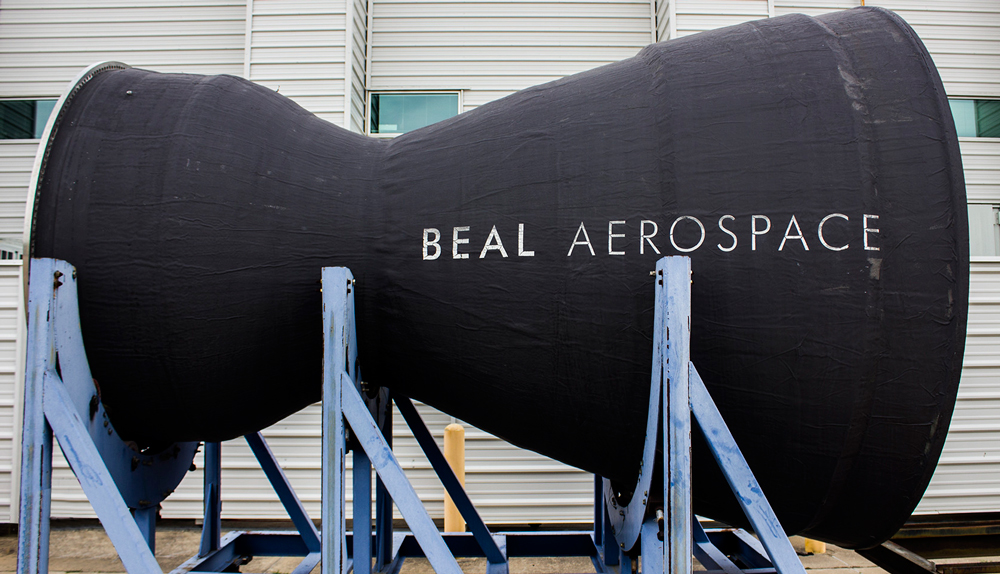
(23, 24)
Sources
- https://www.dallasobserver.com/news/love-and-rockets-6392592
- https://www-spacepage-be.translate.goog/artikelen/ruimtevaart/commerciele-ruimtevaart/beal-aerospace?_x_tr_sl=auto&_x_tr_tl=en&_x_tr_hl=en&_x_tr_pto=wapp
- https://wacohistory.org/items/show/160
- https://doi.org/10.2514/6.2009-1163
- https://thealphacentauri.net/89246-beal-aerospace-nezaslujenno-zabytyy-igrok-chastnogo-kosmosa/
- https://www-spacepage-be.translate.goog/artikelen/ruimtevaart/commerciele-ruimtevaart/beal-aerospace?_x_tr_sl=auto&_x_tr_tl=en&_x_tr_hl=en&_x_tr_pto=wapp
- Personal communications with Dan Moser
- https://spaceresearch.ssau.ru/doc/materials/%D0%9A%D0%B0%D1%80%D1%84%D0%B8%D0%B4%D0%BE%D0%B2%20-%20%D0%A2%D0%BE%D0%BC%205.%20%D0%A7%D0%B0%D1%81%D1%82%D0%BD%D0%B0%D1%8F%20%D0%BA%D0%BE%D1%81%D0%BC%D0%BE%D0%BD%D0%B0%D0%B2%D1%82%D0%B8%D0%BA%D0%B0.pdf
- https://web.archive.org/web/20240228095039/https://www.flightglobal.com/beal-means-business/21091.article
- https://web.archive.org/web/19981212023126/https://www.bealaerospace.com/
- https://space.skyrocket.de/doc_lau/ba2.htm
- http://www.astronautix.com/b/bealba-2.html
- https://archive.org/details/europaworldyearb0002unse_43ed
- https://jco.birdscaribbean.org/index.php/jco/article/download/992/614/3115
- https://stcroixsource.com/1999/10/28/beal-deal-battle-continues-court/
- https://www.latinamericanstudies.org/guyana/launch.htm
- https://www.andrewbeal.com/Beal-AndrewBeal/media/AndrewBeal/Documents/10-Dallas-Observer-article-on-closing-of-Beal-Aerospace-(Love-Rockets),-2001.pdf
- https://www.google.com/books/edition/Commercial_Space_Launch_Industry/JBsSAAAAIAAJ?hl=en&gbpv=0
- https://www.bealaerospace.com/
- https://records.tceq.texas.gov/cs/idcplg?IdcService=GET_FILE&dID=1393052&dDocName=1229619&allowInterrupt=1
- https://rwb.net/project/frisco-public-library/
- https://friscolibrary.com/missionandhistory/
- https://flightmuseum.com/education/initiatives-and-awards/
- https://kosmonautix.cz/2021/08/top-5-soukrome-firmy-ktere-si-na-vesmiru-vylamaly-zuby/
 Fuzzy Aerospace
Leave a comment